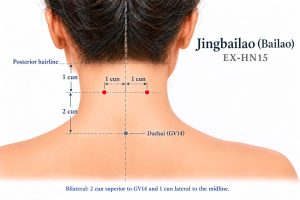
Acupuncture administered three times weekly for four weeks produced greater improvements in neck-related disability, pain intensity, and pain tolerance than once-weekly treatment in young adults with chronic neck pain, according to a randomized controlled trial. Both schedules outperformed a waiting-list control. Four weeks after treatment ended, the higher-frequency group retained a statistically significant advantage over weekly treatment for visual analogue scale (VAS) pain scores.
Researchers affiliated with Guangzhou University of Chinese Medicine conducted the single-center trial at Guangdong Provincial Hospital of Chinese Medicine. Ninety participants were randomized equally to three sessions weekly, one session weekly, or waiting-list control. Both acupuncture groups received identical point prescriptions and per-session stimulation protocols. The schedules differed in visit frequency and total planned treatments: 12 versus four sessions.[1]
Eligible participants were 18–44 years old, with neck symptoms lasting at least three months, VAS scores of at least 3, and symptoms on at least five days during a consecutive week. Acupuncture, massage, or related treatment within the preceding month precluded enrollment. Analgesic medications for neck pain were prohibited during the study. Median ages were 25–26 years across groups, median disease duration was approximately two years, and the sample included 71 women and 19 men.
The prescription consisted of bilateral Jingbailao (EX-HN15) and Jianzhongshu (SI15). The same licensed acupuncturist administered all treatments using sterile disposable needles measuring 0.30 mm in diameter and 40 mm in length, inserted into the local muscle layer to approximately 20 mm. After manual manipulation to elicit deqi, the needles were connected to an electroacupuncture device delivering a 2-Hz wave. Intensity was adjusted to each participant’s tolerance. Stimulation continued for 30 minutes before needle withdrawal.
The study states, “Both acupuncture groups received bilateral electroacupuncture at Jingbailao (EX-HN15) and Jianzhongshu (SI15) for 30 min per session for 4 weeks.” However, it does not clearly specify electrode pairings, lead polarity, or whether connections were made on the same side or across sides.[1]
The higher-frequency group received treatment every other day, totaling three sessions weekly for four consecutive weeks. The lower-frequency group received one session weekly for four weeks. Controls received no intervention during the observation period and were offered treatment afterward. The authors emphasized avoiding excessive penetration in the cervicothoracic and upper-back regions. No herbal medicine, moxibustion, or adjunctive procedure was described.
Neck-related disability, the primary outcome, was assessed with the Northwick Park Questionnaire (NPQ). Median scores decreased from 36.85 to 16.15 with three weekly sessions, from 36.10 to 25.00 with weekly treatment, and from 34.40 to 32.25 in controls. At week four, the higher-frequency group had significantly lower scores than the weekly group and controls, documenting quantifiably better outcomes. Weekly treatment also significantly outperformed controls.
Median VAS scores were 5.00 in all groups at baseline. VAS stands for visual analogue scale, a patient-reported measure of pain intensity. Higher scores indicate greater pain, and lower scores indicate less pain.
At week four, VAS medians were 2.00 in both acupuncture groups and 4.00 in controls. Despite identical treatment-group medians, interquartile ranges differed: 1.00–2.00 with three weekly sessions versus 2.00–3.00 with weekly treatment. The Bonferroni-adjusted comparison significantly favored the higher-frequency schedule.
Short-Form McGill Pain Questionnaire medians were 8.00, 9.50, and 17.00, respectively, also significantly favoring three weekly sessions over weekly treatment. The Short-Form McGill Pain Questionnaire (SF-MPQ) is a patient-reported questionnaire used to assess pain characteristics and intensity. Lower scores indicate less pain.
Pain perception and pain tolerance thresholds were measured bilaterally using a Wagner FDK10 force gauge with a 0.5-cm² probe applied perpendicular to the measurement point. Pressure increased until participants first perceived pain, then continued until it became intolerable. Each measurement sequence was repeated three times, with 10–40-second intervals, and averaged. These instrumented measurements depended on participants’ reports of pain onset and tolerance.
At week four, median perception thresholds were 2.10, 1.90, and 1.50 kg/cm² in the higher-frequency, weekly, and control groups, respectively. Both acupuncture groups significantly exceeded controls. Three weekly sessions significantly exceeded weekly treatment, and both acupuncture groups significantly exceeded controls.
Follow-up compared only the acupuncture groups. Four weeks after treatment ended, median VAS scores were 3.00 versus 3.55, significantly favoring three weekly sessions. NPQ and McGill scores no longer differed significantly between schedules. Pressure thresholds were not reassessed.
The trial found that electroacupuncture at bilateral Jingbailao (EX-HN15, M-HN-30) and Jianzhongshu (SI15) improved pain, neck-related disability, and pressure pain thresholds compared with waiting-list observation in young adults with chronic neck pain. Three weekly sessions for four weeks provided greater short-term improvements in pain, disability, and pain tolerance than once-weekly treatment. Four weeks after treatment ended, however, only the advantage in VAS pain scores remained statistically significant. These findings support the higher-frequency regimen for greater improvement during the treatment period, while its sustained advantage remains uncertain.[1]
Source
- Qiu-Yue Tu, Zi-Yi He, Jian-Peng Huang, and Jian-Hua Liu, “Effects of Different Electroacupuncture Frequencies in Young Adults with Chronic Neck Pain: A Randomized Controlled Trial,” Journal of Pain Research 19 (2026), article 638747.